
After the Funding Euphoria: Why Hyderabad Startups Are Quietly Cutting Costs Instead of Chasing Growth
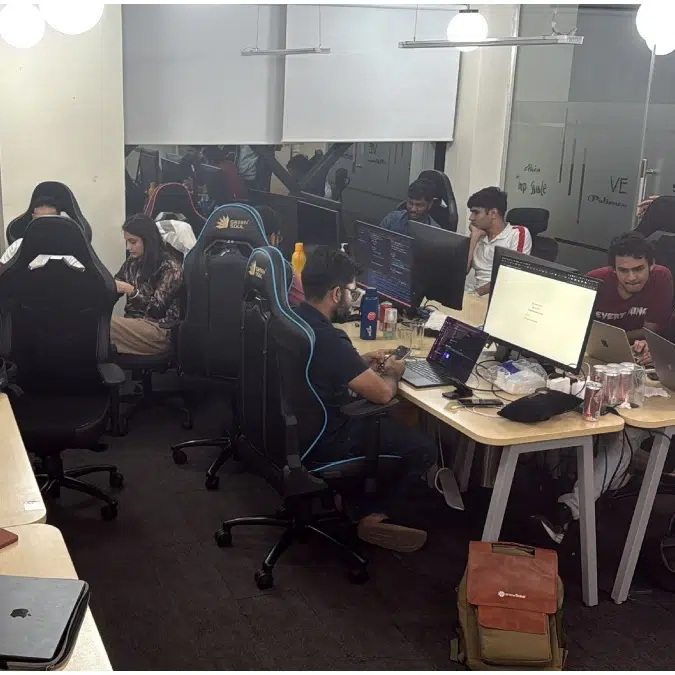
In the public imagination, India’s startup ecosystem is still associated with fundraising announcements, expansion plans, and ambitious hiring sprees. But behind closed doors in Hyderabad—a city that hosts hundreds of venture-backed startups—the mood has shifted markedly over the past year.
Instead of announcing layoffs or dramatic pivots, many Hyderabad-based startups are engaging in silent corrections: slowing hiring, cutting discretionary spend, renegotiating vendor contracts, and quietly shelving expansion plans. The change is subtle, but widespread.
Industry executives say this phase is less about crisis and more about recalibration.
From Expansion to Endurance
During the peak funding years of 2021–22, startups across sectors—SaaS, fintech, healthtech, and logistics—scaled aggressively. Headcount growth was often tied to capital availability rather than revenue predictability.
That approach is now being reassessed.
Founders at several Hyderabad-based startups, including enterprise-focused firms like Darwinbox and Yellow.ai, have shifted focus toward unit economics, customer retention, and cash runway, according to people familiar with internal discussions.
While these companies have not announced layoffs, hiring has slowed significantly, and teams are being asked to do more with fewer resources.
“The question has changed,” said a senior operator at a mid-stage SaaS startup. “Earlier it was, ‘How fast can we grow?’ Now it’s, ‘How long can we last if capital stays tight?’”
Why Hyderabad Is Responding Differently
Unlike some startup hubs where corrections play out publicly, Hyderabad’s ecosystem tends to absorb shocks quietly.
The city’s startup culture—shaped by enterprise services, global delivery centres, and family-run businesses—has historically valued stability over spectacle. That mindset is influencing how founders respond to the funding slowdown.
Rather than large, morale-shattering layoffs, many startups are opting for:
- delayed hiring plans
- performance-based exits
- consolidation of roles
- postponement of international offices
This approach reduces reputational damage while buying time to adjust business models.
Capital Is Still Available—But Selective
Contrary to popular perception, venture capital has not disappeared. It has become far more selective.
Investors are prioritising startups with predictable revenues, strong gross margins, and enterprise customers. Companies without clear paths to profitability are finding it difficult to raise follow-on rounds, even if they raised large sums earlier.
Healthtech platforms like ekincare, which focus on enterprise clients and recurring contracts, are seen as better positioned than consumer-facing startups with high acquisition costs.
“Today, the pitch deck matters less than the bank statement,” said an early-stage investor active in the Hyderabad market.
Employees Feel the Shift
For startup employees, the change has been gradual but noticeable.
Salary hikes are smaller. Promotions take longer. ESOP liquidity conversations have slowed. Travel budgets and offsites are being questioned.
Yet, compared to mass layoffs seen in other tech hubs globally, Hyderabad has experienced fewer headline-grabbing job cuts. This has helped maintain relative calm—but also increased internal pressure to perform.
“Everyone knows the margin for error is smaller now,” said a product manager at a SaaS startup. “That changes behaviour.”
A More Mature Ecosystem Emerging
Paradoxically, this phase may strengthen Hyderabad’s startup ecosystem in the long run.
Founders are being forced to confront difficult questions early:
- Which customers actually pay on time?
- Which features drive revenue, not demos?
- Which roles are essential versus aspirational?
These conversations, often postponed during boom cycles, are now unavoidable.
Industry veterans argue that this correction could filter out weak business models while reinforcing companies built on real demand.
Quiet, But Not Weak
What’s happening in Hyderabad is not a retreat—it’s a reset.
Startups are choosing discretion over drama, internal discipline over public reassurance. In a market where capital cycles are tightening globally, that restraint may prove to be a competitive advantage.
As one founder put it privately:
“Surviving this phase without noise might be the best signal of strength.”